
Where private-sector expertise meets the nation’s toughest coordination challenges.
PSEMA is expanding into applied research, putting the knowledge of our members to work on the problems that matter most to national resilience. This is a new way for members to engage: connecting real-world business expertise to the coordination challenges facing government, industry, and communities. Explore the work underway, and be part of the conversations shaping what comes next.
A New Way to Engage
Research & Innovation is more than a reading list. It’s a space for members to participate, sharing field experience, joining the conversation through webinars and discussion, and helping connect research to the decisions businesses actually make.
As this area grows, members will find new opportunities to contribute expertise, shape research questions, and put findings to work inside their own organizations. This is applied research with a purpose: a stronger, more coordinated private sector, ready before the need arises.
Homeland Defense & Arctic Research
PSEMA conducted two studies in support of the Homeland Defense Institute (HDI) and NORAD and USNORTHCOM Arctic mission assurance priorities. Both ask what happens in Alaska if a West Coast port disruption and an Arctic escalation hit at the same time, and both concentrate on the first fourteen days, when decisions matter most. We presented both at HDI’s Homeland Defense Awareness Symposium in Colorado Springs in June 2026. Each study is available as an executive summary, a full final report, and supporting appendices.
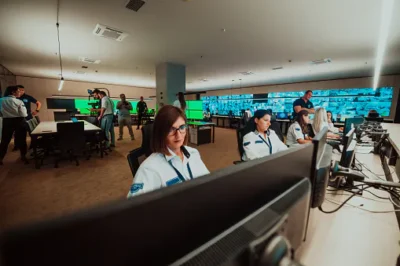
Watch the Kick-Off Overview
On November 10, 2026, PSEMA opened the Arctic Lifelines webinar series with a 45-minute overview of both research papers: what we studied, how we did it, and what we found. Sessions continue Tuesdays at 4:00 p.m. ET. Dates and registration are on this page.
Private-Sector Lifelines in the Arctic
Predicting and Assessing Risk to Critical Infrastructure
How privately operated lifeline systems (fuel, food, transportation, communications, medical supply, and supply-chain distribution) hold up when Arctic homeland defense depends on them under contested conditions. The study tests those systems against a dual-theater disruption and consolidates its findings into six conclusions, starting with fuel as the master dependency, with recommendations for the near, mid, and long term.
Continuity of Society in the North
Multi-Modal Resiliency in Arctic Defense
The companion study. Where Private-Sector Lifelines traces what happens to systems, this one traces what happens to people: military families, the civilian and contractor workforce, tribal and Alaska Native communities, and the civil-military governance that connects them. It treats those human systems as operational factors in mission assurance and sets out six conclusions, starting with continuity of society as a prerequisite for continuity of operations.
This publication was sponsored by the Homeland Defense Institute. The views expressed in this publication do not necessarily represent the views of the United States Air Force Academy, North American Aerospace Defense Command and United States Northern Command, the Department of Defense, or the United States Government.
PSEMA Research Webinar Series · Tuesdays at 4:00 p.m. ET · Part one begins November 10, 2026
A Series to Walk Through the Research
Twelve live sessions on PSEMA’s two studies for the Homeland Defense Institute. The series opened November 10 with a free overview of both studies, and the recording is on this page. Among the findings: fuel is the master dependency, backup systems often share the same weak points as the primary system, and the first 14 days decide whether a disruption becomes a prolonged failure.
Part One, Arctic Lifelines: From Findings to Coordination, works through Private-Sector Lifelines in the Arctic from November 17 to January 12.
Part Two, Human Lifelines: From Households to Mission Assurance, works through Continuity of Society in the North from January 19 to February 23.
Each session puts the sectors that share a failure pathway in the same room: a short presentation of the finding, a practitioner discussant on what it looks like from their seat, and open discussion under PSEMA’s non-attribution norms. Pick the sessions that match your sector.
When: Tuesdays, 4:00 p.m. ET (3:00 p.m. CT, 2:00 p.m. MT, 1:00 p.m. PT, noon Alaska, 11:00 a.m. Hawaii). Live on Zoom, 60 minutes.
Registration is open. Session 1 of each part is free to everyone. PSEMA members attend every session at no cost; log in to register. Non-members can buy a pass for Sessions 2 to 6 of each part ($125) or a single session ($35). Need an invoice for your agency? Write to [email protected].
Series Overview: November 10
The series opens with a free overview of both studies: what we found, how the research was done, and how the thirteen sessions are built around it. The findings come in two layers. The systems layer: fuel is the master dependency every other lifeline rides on, commercial inventory buffers in Alaska are measured in days, and replacing one week of Port of Alaska cargo by air would take roughly 700 wide-body cargo landings. The people layer: households lead and installations lag, the civilian workforce lives in the same communities the disruption hits, and governance friction in Days 3 to 7 sets the course of the cascade.
Start here if you are deciding which sessions to attend. We will close with the Part One and Part Two schedules and which sectors each session is built for.
Tuesday, November 10, 2026, 4:00 p.m. ET. Free and open to everyone.
Part One Opens: November 17
Session 1 opens Arctic Lifelines: From Findings to Coordination with an overview of Private-Sector Lifelines in the Arctic. The study tests the privately operated systems that Arctic homeland defense depends on (fuel, food, transportation, communications, medical supply, and supply-chain distribution) against a West Coast port disruption and an Arctic escalation at the same time, across the first fourteen days. We will walk through its six conclusions and the five sessions that follow from them.
Then we take up the first conclusion: fuel as the master dependency. Every other lifeline in the study rides on fuel, so this is where the cascade starts. A practitioner discussant will speak to what that looks like from the distribution side.
Tuesday, November 17, 2026, 4:00 p.m. ET. Free and open to everyone. Sessions 2 to 6 are free for PSEMA members and available to non-members through the Part One Pass or a single session.
Arctic Lifelines: From Findings to Coordination
| Topic | Date | Time |
|---|---|---|
| Fuel & Energy: The Master Dependency | November 17, 2026 | 4:00 p.m. ET / 3:00 p.m. CT |
| Transportation, Supply Chain & Food: Substitution and the Cascade | December 1, 2026 | 4:00 p.m. ET / 3:00 p.m. CT |
| Medical & Pharmaceutical: The Day-Zero Problem | December 8, 2026 | 4:00 p.m. ET / 3:00 p.m. CT |
| Communications & Workforce: The Cross-Cutting Force Degraders | December 15, 2026 | 4:00 p.m. ET / 3:00 p.m. CT |
| Governance Friction and the Day-Zero Adjudication Problem | January 5, 2027 | 4:00 p.m. ET / 3:00 p.m. CT |
| Coordination Architecture and Pre-Staged Authority | January 12, 2027 | 4:00 p.m. ET / 3:00 p.m. CT |
No session the week of November 23. Part One breaks for the holidays after December 15 and closes with Session 6 on January 12, 2027.
Human Lifelines: From Households to Mission Assurance
| Topic | Date | Time |
|---|---|---|
| Continuity of Society Is the Prerequisite | January 19, 2027 | 4:00 p.m. ET / 3:00 p.m. CT |
| Family Readiness and the Workforce-Family Feedback Loop | January 26, 2027 | 4:00 p.m. ET / 3:00 p.m. CT |
| Workforce Continuity and Behavioral Health: The Ceiling on Surge | February 2, 2027 | 4:00 p.m. ET / 3:00 p.m. CT |
| Governance Friction and the Days 3 to 7 Inflection | February 9, 2027 | 4:00 p.m. ET / 3:00 p.m. CT |
| Whole-of-Society Preparedness and the Arctic Rising Generation | February 16, 2027 | 4:00 p.m. ET / 3:00 p.m. CT |
| From Society to Mission Assurance: Building the Connective Architecture | February 23, 2027 | 4:00 p.m. ET / 3:00 p.m. CT |

